
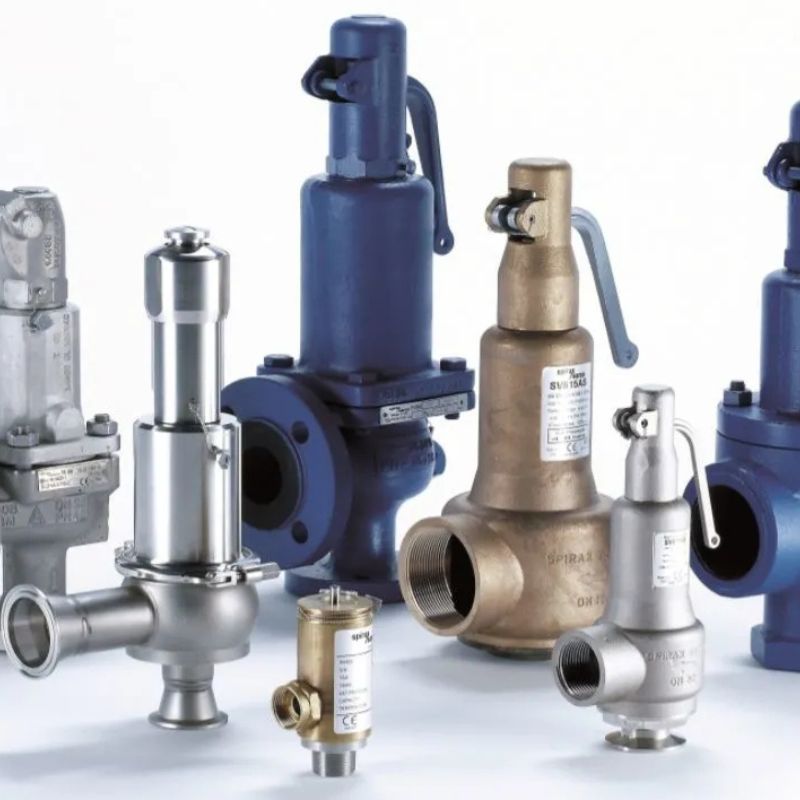
Pressure Reducing Valves
A Pressure Reducing Valve (PRV) is a type of control valve that automatically reduces a higher inlet pressure to a lower, stable outlet pressure, regardless of fluctuations in demand or upstream pressure. It’s commonly used in water, steam, gas, and air systems.
How It Works:
1. Inlet pressure enters the valve.
2. A spring-loaded diaphragm or piston senses the downstream pressure.
3. If the downstream pressure is too high, the valve closes slightly to reduce flow.
4. If the downstream pressure is too low, the valve opens more to increase flow.
5. The valve maintains a constant outlet pressure as set by the spring tension.
Types of PRVs:
• Direct-acting PRV: Simple, compact, and used for low-flow applications.
• Pilot-operated PRV: More accurate and stable, used in high-flow or high-pressure systems.
Applications:
• Domestic water systems (to prevent pipe damage)
• Steam systems (to protect equipment)
• Industrial gas systems (to maintain safe operating pressures)
• Irrigation systems (to ensure consistent water delivery)
Advantages:
• Protects downstream equipment
• Reduces water hammer and pipe stress
• Improves system efficiency and safety
Need more information?
Get in touch: